

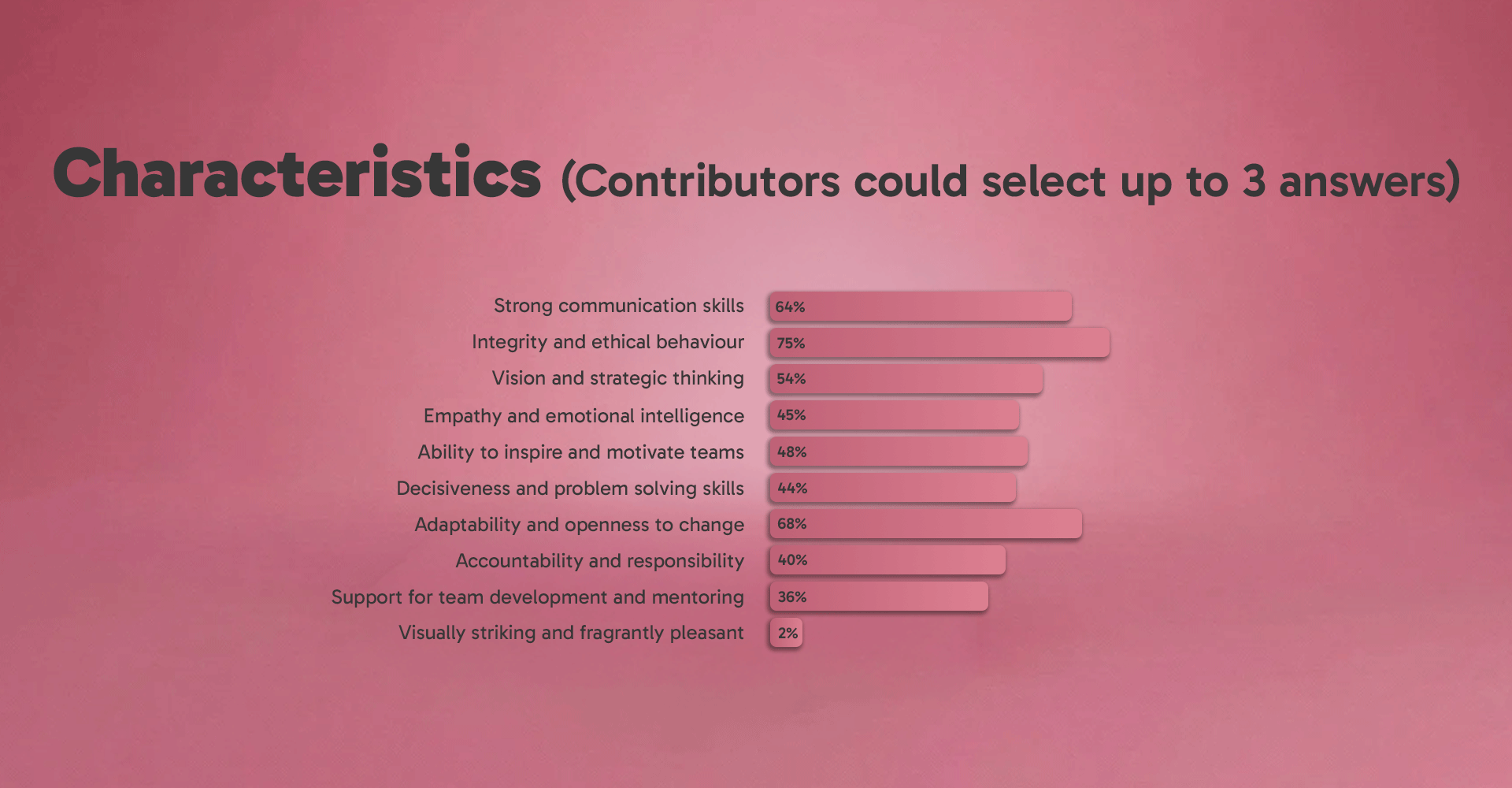
If there is one statistic that should command every boardroom's attention, it is the overwhelming importance placed upon integrity. Technical brilliance, commercial acumen and strategic vision all matter, but employees increasingly expect leaders who are trusted before they are admired. In an era characterised by constant organisational change, economic uncertainty and evolving regulation, professionals want leaders whose decisions are transparent, ethical and consistent. Trust has become one of the most valuable currencies in modern leadership.
Adaptability's exceptionally strong performance reflects the pace of change facing today's profession. Finance leaders are navigating automation, artificial intelligence, changing compliance frameworks, shifting client expectations and talent shortages simultaneously. Employees understand that certainty is increasingly rare. What they seek instead are leaders capable of making sound decisions amid uncertainty while remaining calm, communicative and commercially aware. Adaptability is increasingly viewed not as a desirable leadership quality but as a fundamental requirement.
Perhaps the most revealing trend is the continued rise of communication, empathy and mentoring. Employees no longer expect leaders simply to allocate work and review performance. They expect coaching, visibility and genuine investment in their development. Poor leadership is becoming an increasingly common catalyst for resignation, often outweighing dissatisfaction with the work itself. In today's recruitment market, organisations frequently lose talented professionals long before they lose employees; disengagement begins quietly, often through ineffective leadership, before eventually appearing as an unexpected resignation.